

The Budget Line Nobody Audits — And Why It Quietly Eats Your Growth

Every company has a budget review. Almost no company has a budget audit.
The difference matters. A review looks at what you plan to spend next year. An audit looks at what you are already spending and asks a rude question: is this still doing anything? Most leadership teams do the first one every fall and skip the second one forever.
So a category grows in the dark. Not one big line item — dozens of small ones spread across tools, retainers, licenses, ad platforms, integrations, and old campaigns still quietly running. Each looked reasonable the day it was approved. Together they take a real bite out of the money you were going to use for growth.
This is the first stop in a four part look at how strong operators turn spending into compounding returns. Before anyone talks about smarter investments, there is cleanup work to do. You cannot compound capital that is already leaking out the side of the building.
“Getting this detail right early is what separates a smooth project from an expensive redo,” notes one specialist focused on Zenith Investment Management.
Invoices That Stopped Earning Their Keep
Ask a finance lead what their largest technology and marketing cost is. They will name a platform. Ask what their total technology and marketing cost is, counted line by line, and the room goes quiet.
The reason is simple. Big purchases get scrutiny because they need approval. Small purchases get a credit card. Renewals get nothing at all, because a renewal feels like a continuation rather than a decision. That is the flaw. A renewal is a decision. You are choosing to spend that money again, this time without any of the analysis you did the first time.
Here is what typically hides in this category:
- Tools bought for one project that ended two years ago
- Seat licenses for people who left the company
- Duplicate capability, where three platforms all send email
- Agency retainers billing a fixed fee for shrinking scope
- Ad spend on autopilot, running against outdated audiences
- Data and enrichment contracts nobody has queried in months
- Add-on modules bundled into a renewal at signature time
None of these feel like waste in the moment. They feel like infrastructure. That is exactly why they survive.
Four Structural Reasons The Drain Keeps Widening
Waste in most cost categories gets caught eventually. Somebody notices the extra truck, the empty warehouse bay, the overtime. Technology and marketing spend behaves differently, and the reasons are structural.
Nobody Owns It End To End
Marketing buys tools. Sales buys tools. Operations buys tools. Finance sees invoices but not use cases. IT sees logins but not contracts. Partners working to grow a real estate law practice run into the same fragmentation, where each group builds its own stack and nobody reconciles the total. No single person can look at the whole picture and say what is redundant, so the whole picture never gets looked at.
Cancelling Feels Riskier Than Paying
Keep a tool nobody uses and nothing happens. Cut a tool and one person turns out to depend on it, and that is your fault publicly. Fear of a small, visible mistake protects a large, invisible one.
Small Numbers Slip Past Attention
Nine hundred dollars a month does not trigger a review. Thirty of those lines is over three hundred thousand a year. The individual amounts sit just under the threshold where anyone asks questions.
Contracts Renew Themselves
Auto renewal is the industry default for a reason. It converts a decision into an accident. A great deal of otherwise disciplined spending survives purely because the notice window closed while somebody was on vacation.
“The pattern we see with owners is not reckless spending, it is unexamined spending, and those are very different problems,” says Marcus Delaney, senior portfolio strategist at Zenith Investment Management. “Capital that leaves quietly never gets defended, because nobody ever put it on trial.”

A Five Step Sweep Through Your Own Statements
You do not need consultants for this. You need one afternoon, bank and card statements for the last twelve months, and a willingness to be a little uncomfortable.
Step One: Pull Twelve Months, Not One
Monthly statements hide annual charges. Export a full year of transactions and sort by vendor. Annual renewals are where the biggest surprises live, because they were approved once and then vanished from anyone's monthly attention.
Step Two: Tag Every Line With A Named Owner
One human name per line item, not a department. If nobody claims it, you have already found money. In a first pass audit, somewhere between ten and twenty percent of lines have no owner at all.
Step Three: Ask The Four Questions
- Who logged in last month? If the answer is nobody, that is your answer.
- What decision or revenue does this produce? Vague answers are a red flag.
- What breaks if it disappears Friday? Be specific about the actual consequence.
- Does something else already do this? Overlap is the most common finding.
Step Four: Sort Into Three Piles
Keep, kill, or renegotiate. Most teams expect a fifty fifty split between keep and kill and are startled by how large the renegotiate pile turns out to be. Unused seats, downgraded tiers, and annual prepay discounts routinely cut a line by a third without losing a single capability.
Step Five: Put The Recovered Money Somewhere Visible
This is the step people skip, and skipping it is why audits do not stick. If reclaimed dollars melt back into general operating cash, nobody feels the win and the audit never happens again. Name the pot. Point it at one growth initiative. The same discipline shows up in service businesses that grow their lawn care business by redirecting recovered overhead into route density instead of letting it disappear into the general fund.

How Much Capital Is Usually Sitting There
A mid sized company doing twenty million in revenue often carries between forty and ninety separate technology and marketing line items. A careful first audit typically finds that eighteen to thirty percent of that spend is dead, duplicated, or overpriced.
Put real numbers on it. If your combined technology and marketing spend is nine hundred thousand a year, that is roughly one hundred sixty thousand to two hundred seventy thousand in recoverable capital. Not new revenue. Not a financing round. Money you already earned and are currently mailing away.
The single year number understates the damage, because waste here grows with the business: new tools get added while old ones never get removed. A leak that costs you two hundred thousand this year costs noticeably more in three years, and every dollar of it could have been deployed into something that returns a multiple.
That is the real argument for the audit. It is not frugality — trimming for its own sake is a small ambition. This is about freeing capital that is capable of compounding, which is the same logic behind the shift toward automated portfolio tools covered in that roundup of az names worth knowing among firms rethinking how they manage growth capital.
Signals You Have A Bigger Leak Than You Think
- No single spreadsheet lists every tool the company pays for
- Renewal dates are not tracked anywhere central
- Two teams solve the same problem with different vendors
- Nobody can state the exact monthly technology and marketing total from memory
- Your last three purchases were approved without a written expected outcome
Three or more of those and the audit will pay for the time it takes several times over.
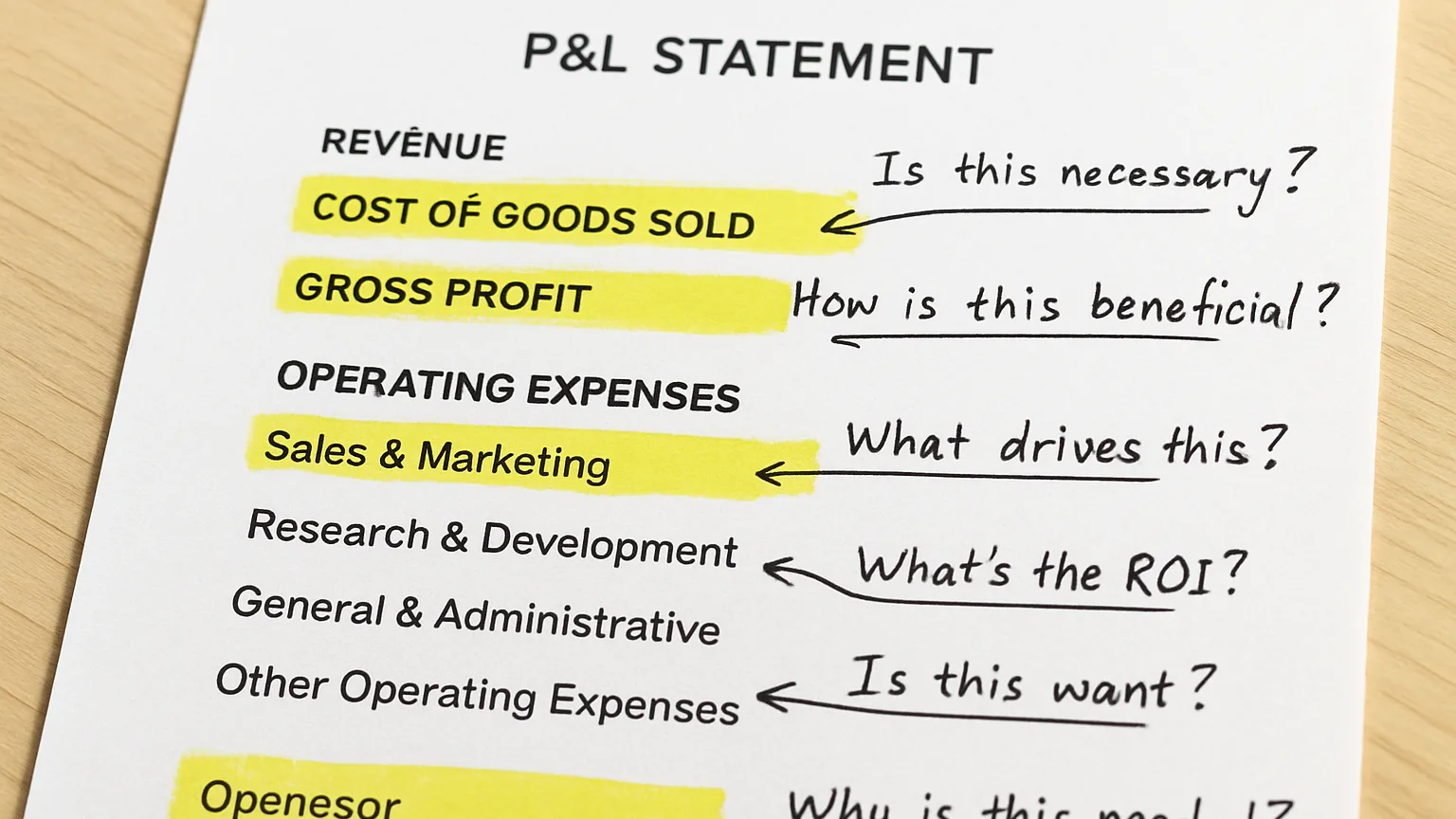
Turning A One Time Cleanup Into A Standing Habit
The trap after a successful audit is treating it as finished. Six months later the same drift starts, because the conditions that created the leak were never changed. Four practices keep this category honest without adding bureaucracy:
- A renewal calendar with a thirty day trigger. Every contract gets a reminder before its notice window, and a renewal requires a one paragraph justification.
- One named owner per line, reviewed quarterly. Ownership changes when people change roles, so the list needs maintenance.
- A written expected outcome for every new purchase. One sentence, filed with the invoice, revisited at the first renewal. This alone changes buying behavior, and it becomes far more powerful once you understand the decision flaw behind "shiny platform trap" and stop repeating it.
- A quarterly sunset review. Fifteen minutes. What did we stop using? Removing things must become as normal as adding them.
Two competitors with identical revenue and identical budgets can end up in completely different places. One funds real capability with the money the other quietly loses to auto renewals. Over three or four years that gap becomes hard to close, especially once the counterintuitive sequence that doubles return starts working in one company's favor and not the other's.
The audit is the entry point, not the destination. It answers what you are wasting. The harder questions come next: how to tell a genuine growth lever from an expensive distraction before you sign, and how to prove your investments are compounding rather than simply piling up, which is where metric your board isn't asking earns its place in your reporting.
Start With The Money You Already Have
Growth conversations almost always start with what to buy next. That instinct skips a step. Unexamined spending does not announce itself and it does not stop on its own. Twelve months of statements, one named owner per line, four blunt questions, and three piles. That is the whole method, and for most companies it surfaces six figures of capital that was never lost, only misplaced.
What makes this worth doing is not the savings. It is what the savings become. Capital recovered from dead tools and stale retainers can be aimed at something that returns a multiple, and that redirection is the first real move in building an engine where spending produces growth instead of just producing invoices. Next in this series: why the last big platform you bought disappointed you, and the screening test that separates real growth levers from expensive distractions before the contract gets signed.


© Copyright - Martech Executors - 2024
Website Powered by Elite Web Design and their Scottsdale team.